Product · Onboarding
The first campaign is built with the executive in the room.
What separates an editorial line from a posting calendar is an answer, and it is not ours to write. The co-creation session exists to draw it out of him — and to prove, there and then, that what comes back sounds like him.
How it works
One question opens the session
What does winning look like this quarter? Being recognised as a reference, opening a hiring pipeline, generating inbound demand or supporting a raise are goals that produce different editorial lines. Everything after this converges on that answer.
The first two posts are written in the session itself
Strategist and executive write together, screen shared. He reacts and approves as it happens, rather than receiving a finished document to validate later.
A note-taking assistant sits in on the call
Someone on your team admits it from the waiting room, and the conversation becomes structure on screen while the executive talks: the goal, the themes he can sustain, the stories he has already lived. Each piece is confirmed there, together — nothing is entered unattended.
The voice leaves the room calibrated
Edits made during the session adjust the writing before the rest of the month is produced. The second campaign starts where the first stopped, not from nothing.
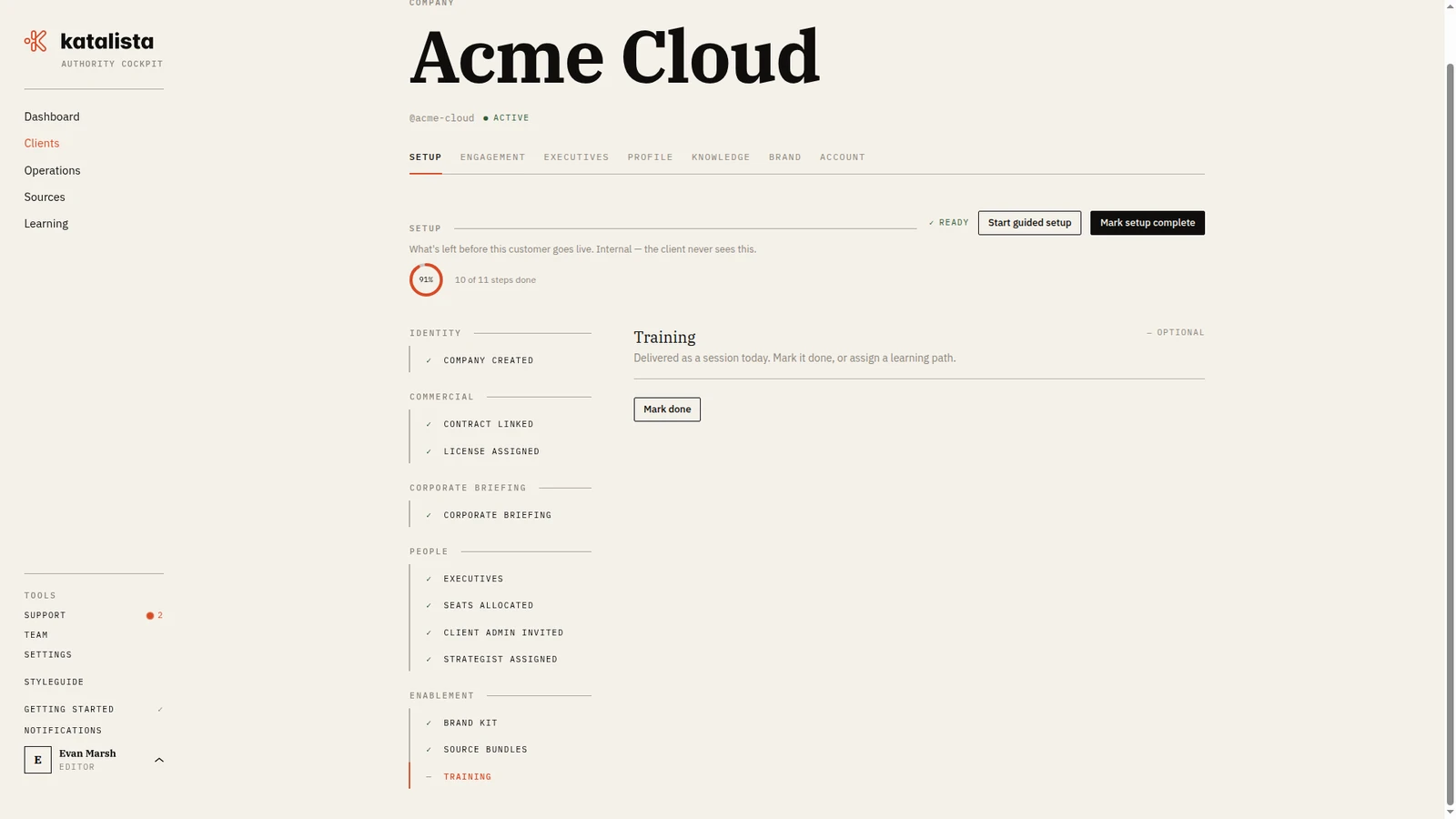
The kickoff sets the goal and the voice, and becomes the measure every later brief is justified against. Two things run around it: your company’s implementation — eleven configuration steps, from compliance rules to access — and the section-by-section review of the executive’s own profile, which every managed plan includes. The post lands on a page, and the page is an argument too.
The rest of the system
- CurationA good post begins long before anyone writes.
- CampaignsThe whole month arrives produced, and every piece sounds like him.
- One-off postsThe subject is today. So is the post.
- Approval and publishingThe final word belongs to whoever signs the post.
- PerformanceThe result goes back into production, not only into the report.